CO₂ emissions reduction in passenger transport
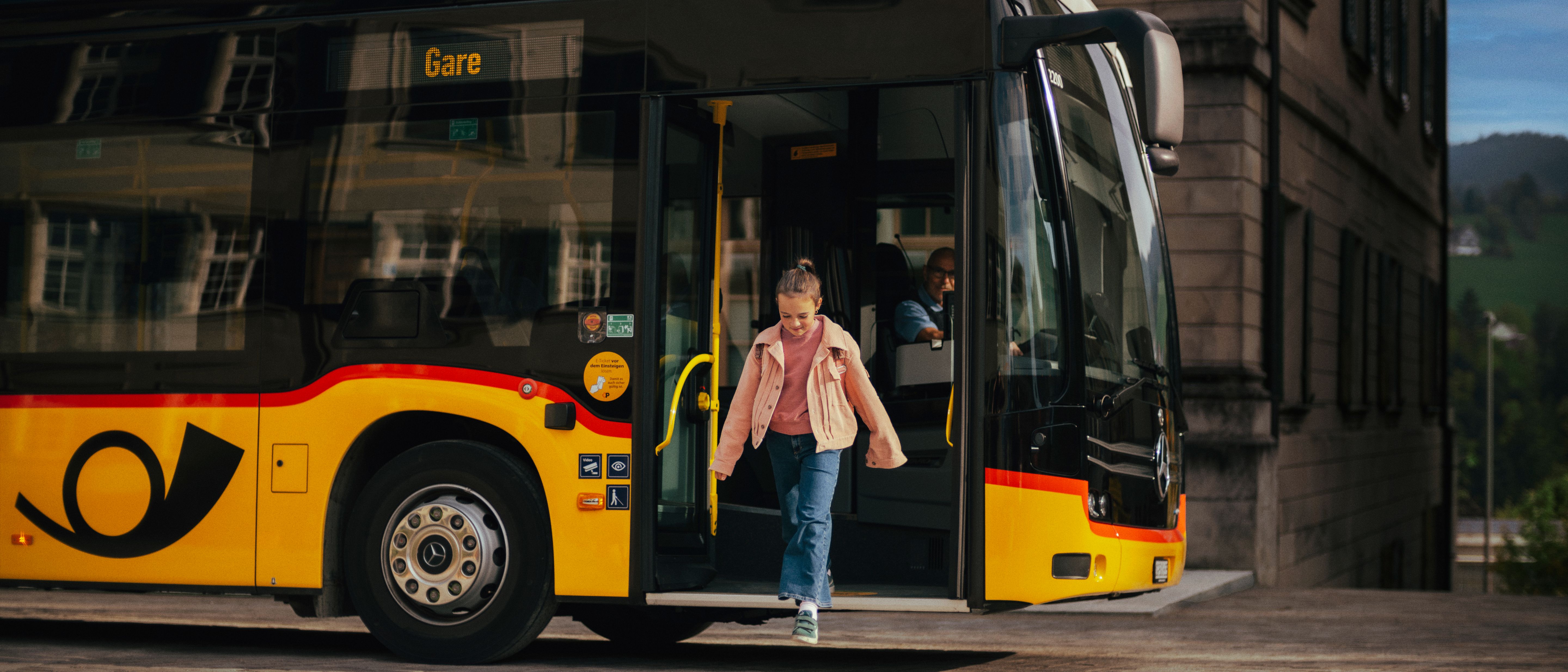
We bring our passengers efficiently, reliably and safely to their destination every day. Together with our customers, partners and public transport purchasers, we look for solutions to enable high-quality and affordable e-mobility in Switzerland. As a leading public transport bus company, we aim to help reduce CO2 emissions in public transport through our efforts.
Switch to electric drive systems in passenger transport
We will gradually convert our entire bus fleet from diesel to electric drive systems by 2035. Besides environmental reasons, the switch to electric drives is increasingly justified by economic factors.
More and more electric Postbuses
200 of around 2,400 Postbuses are electric (as at July 2026). We procure Postbuses with battery electric drives. This technology is market-ready and has proven successful in practice both in Switzerland and abroad.
Expansion of electric infrastructure
The relevant charging infrastructure is required to charge the batteries. It can, however, take up to two years from the initial idea to construction and commissioning of a system. Our charging infrastructure specialists master the complex interaction between vehicles, charging infrastructure and energy management to ensure that every electric vehicle can be charged at the optimum time at every charging station.
Range of 250 kilometres per day
At present (as at July 2026), the average range of battery-powered buses on a single charge per day is around 250 kilometres. And this range can be increased to over 300 kilometres or more if the battery is recharged several times a day.
Status of electric buses in operation / planned commissioning per region
Source: PostBus Ltd, as at September 2026, Created with Datawrapper
Loading ...
Stefan Regli, Head of Mobility Services and Member of Executive Management at Swiss Post

Our fleet of approximately 2,400 Postbuses, large and small, will be electric in the future. This will enable us to significantly cut CO₂ emissions from road-based public transport, reduce noise and, in the medium term, benefit from lower costs than for diesel vehicles.